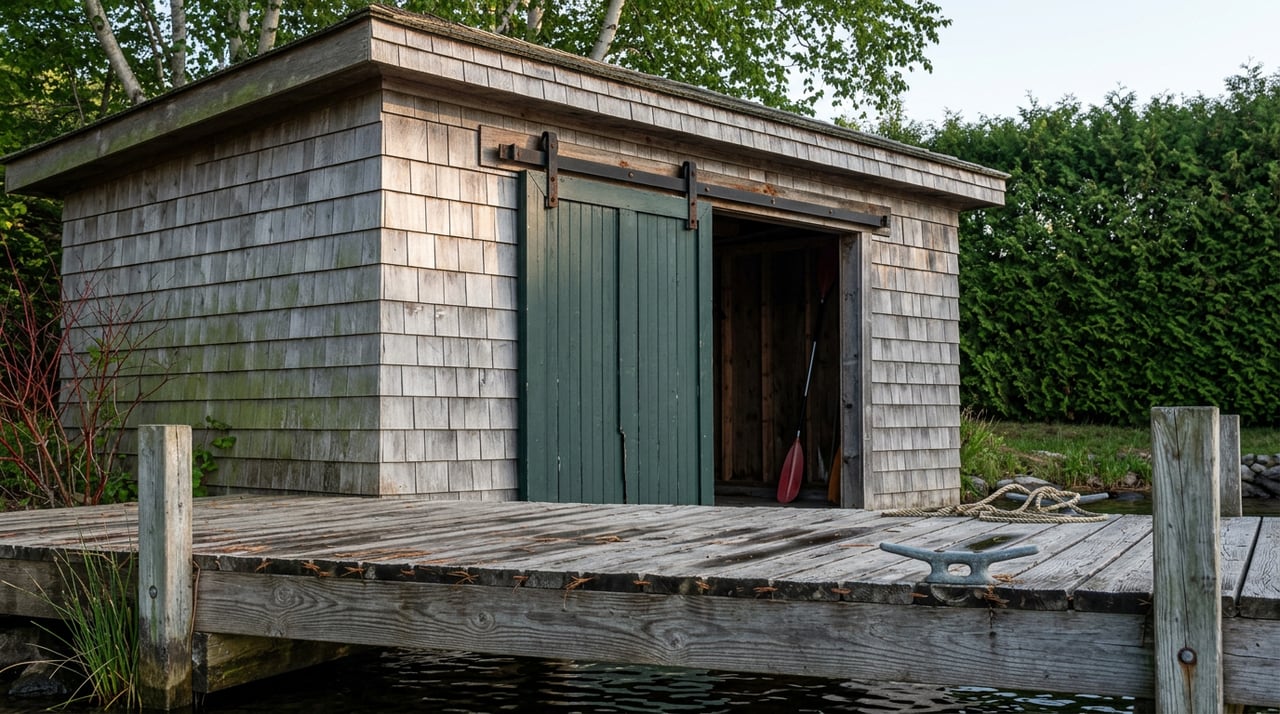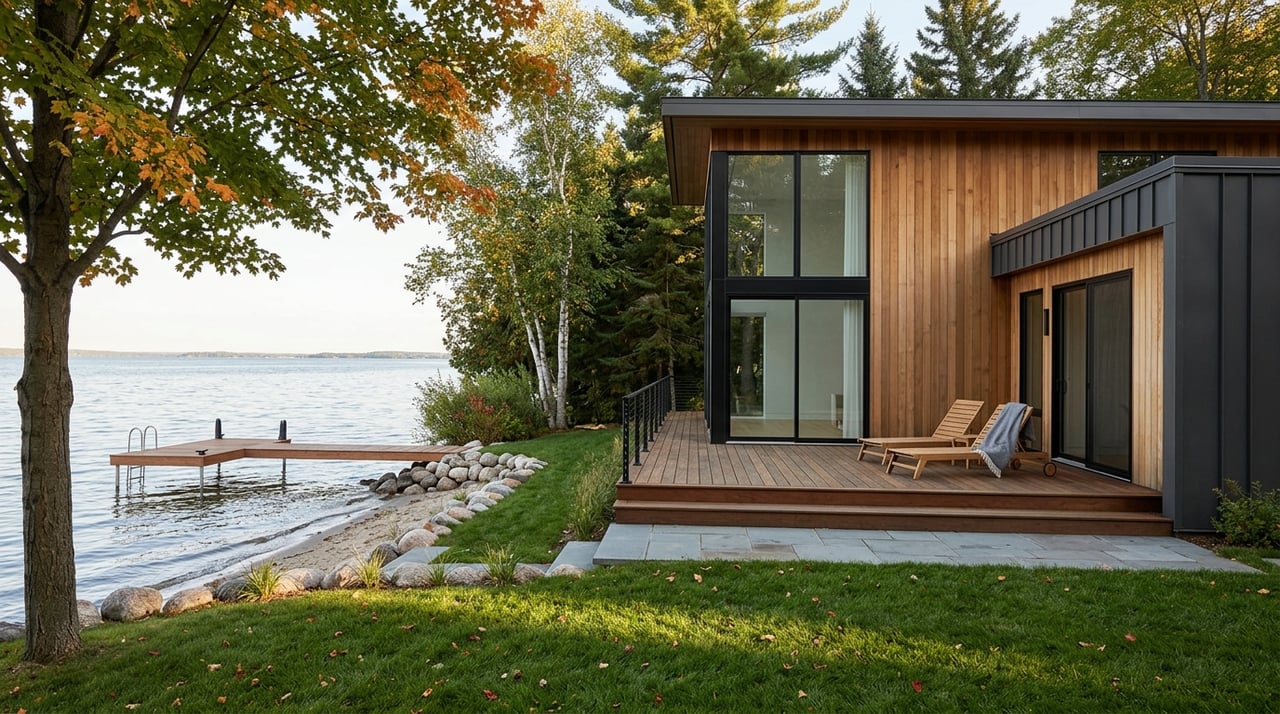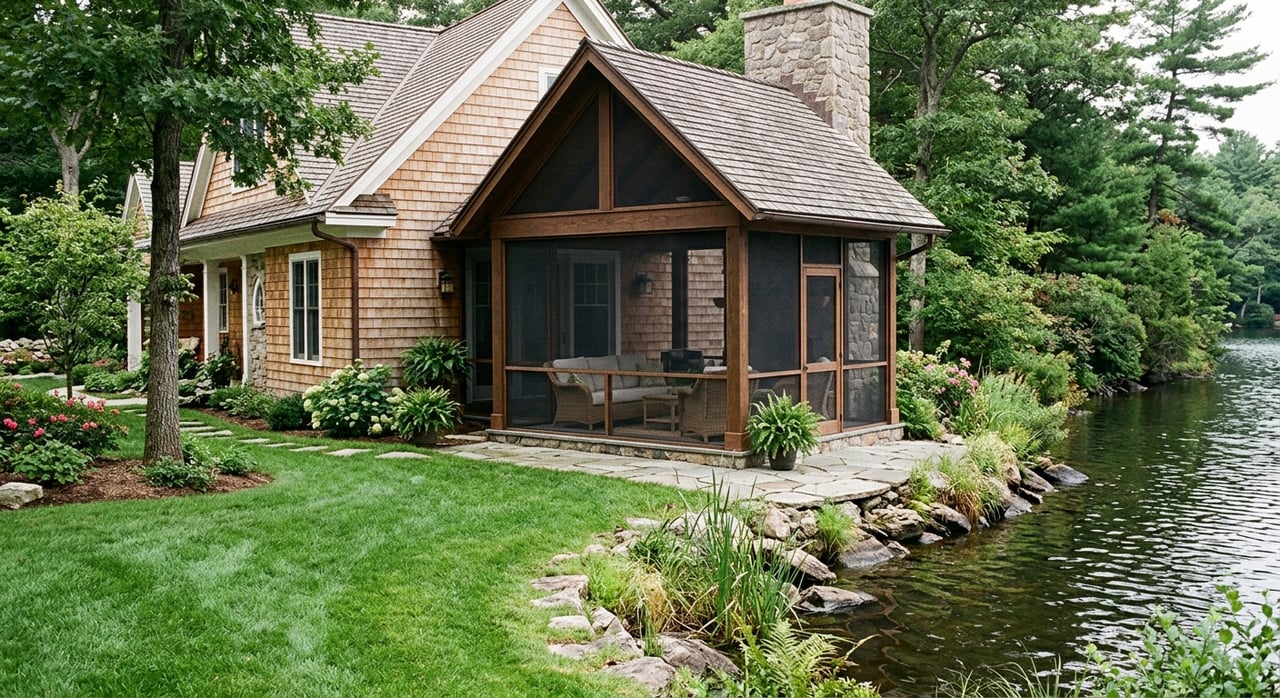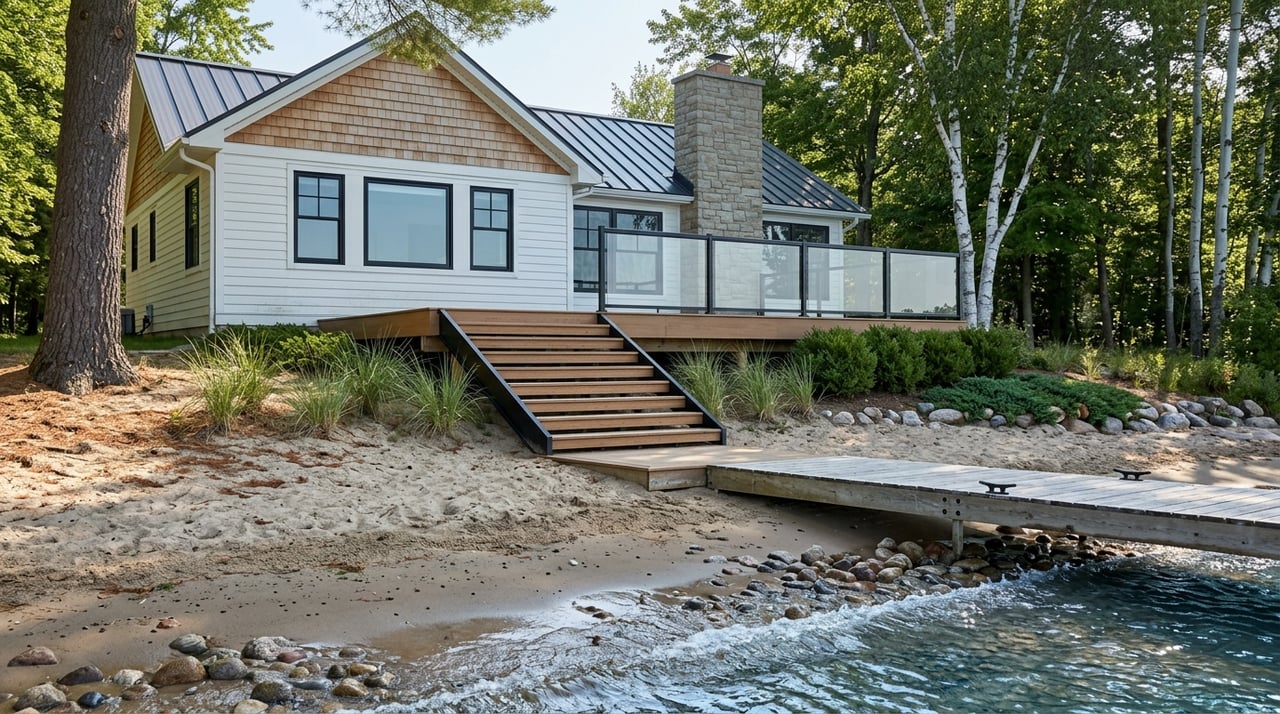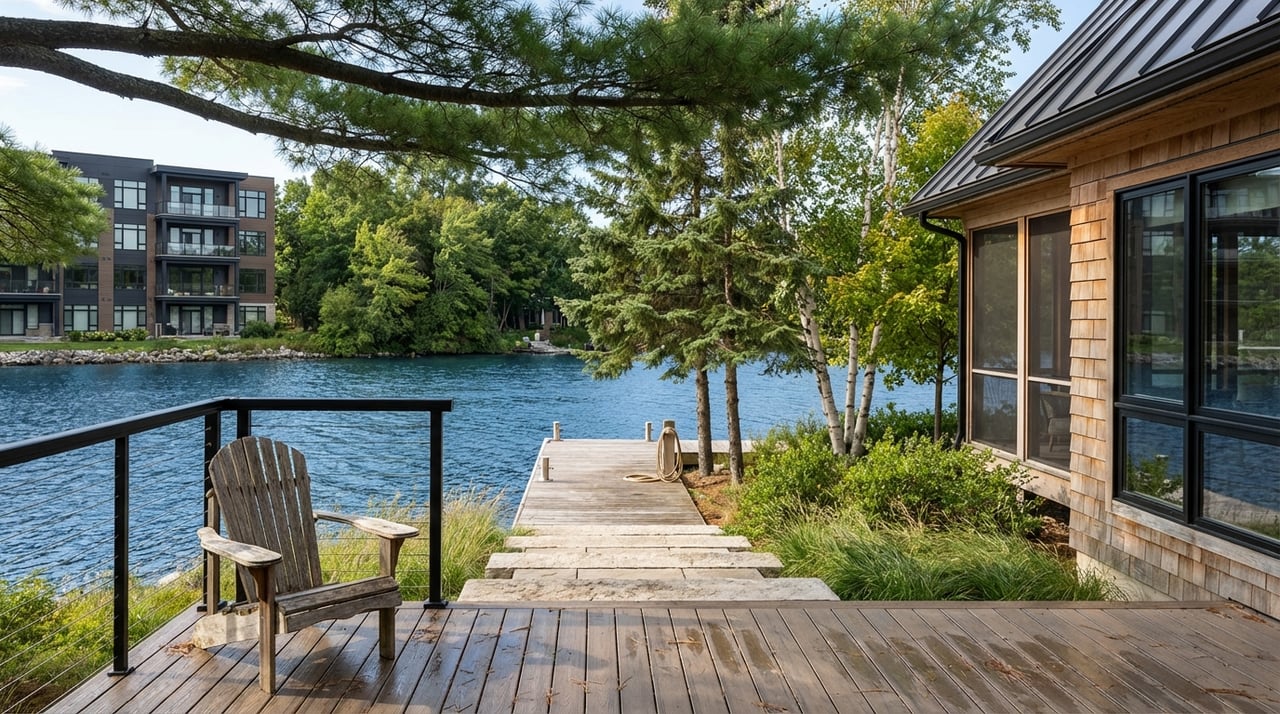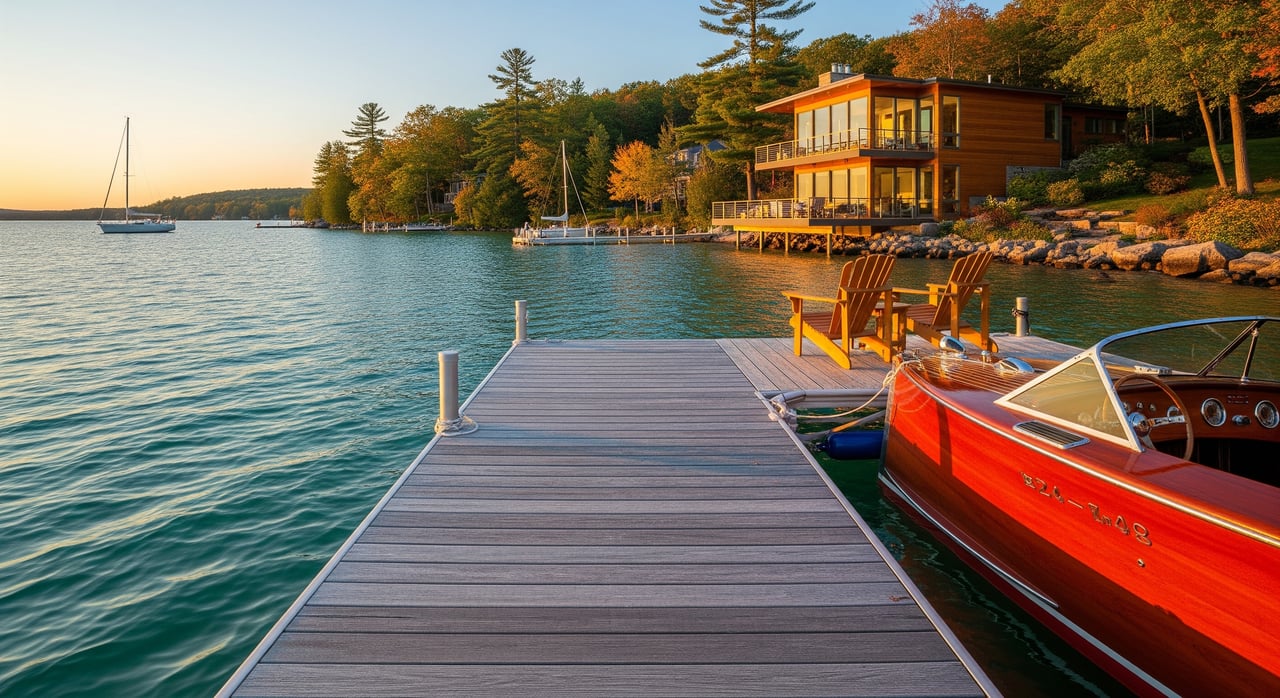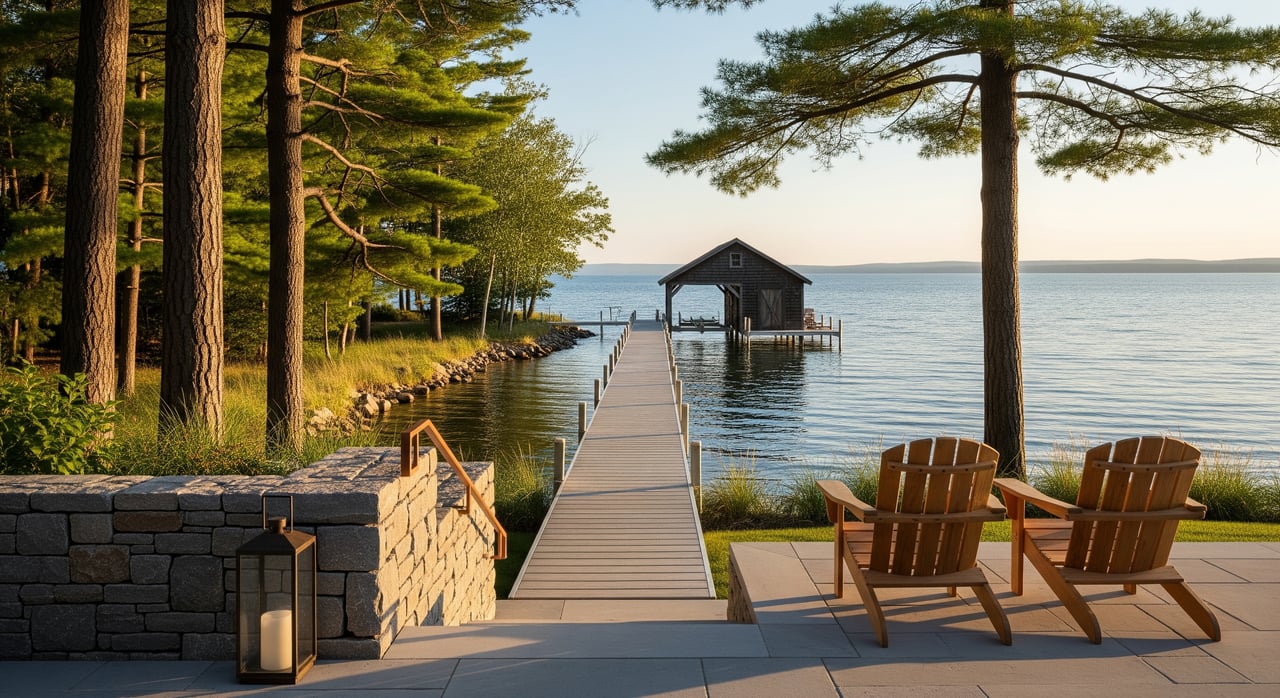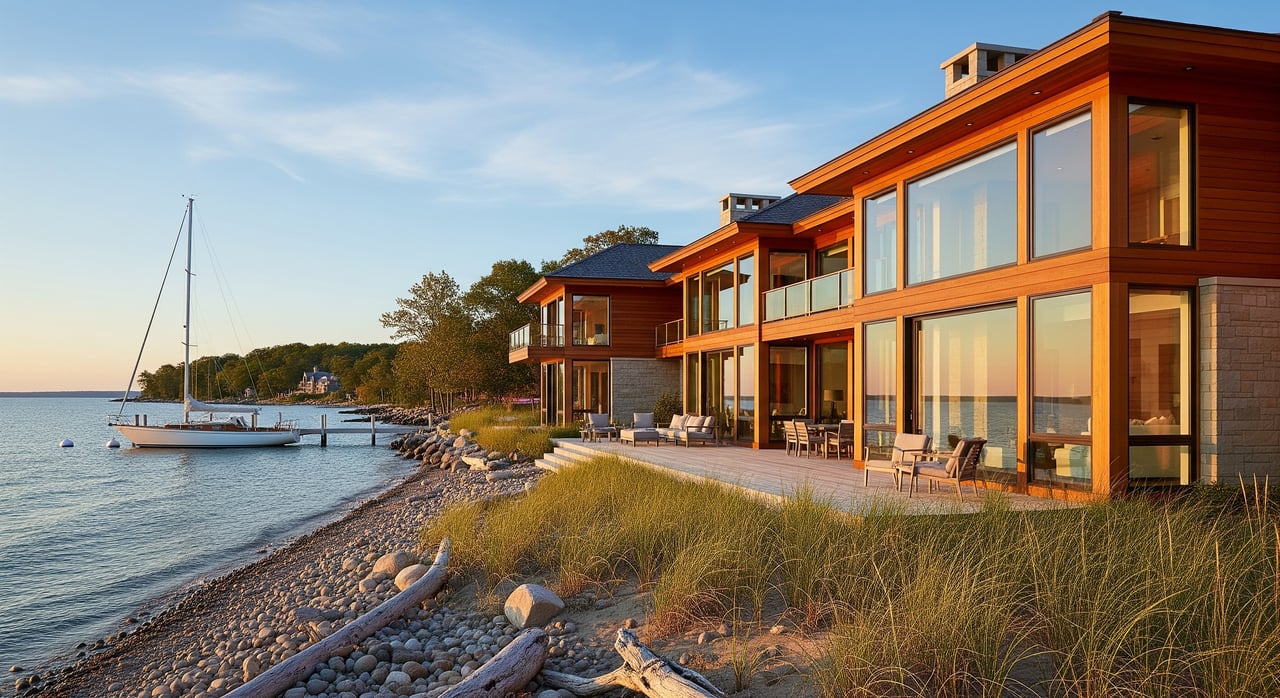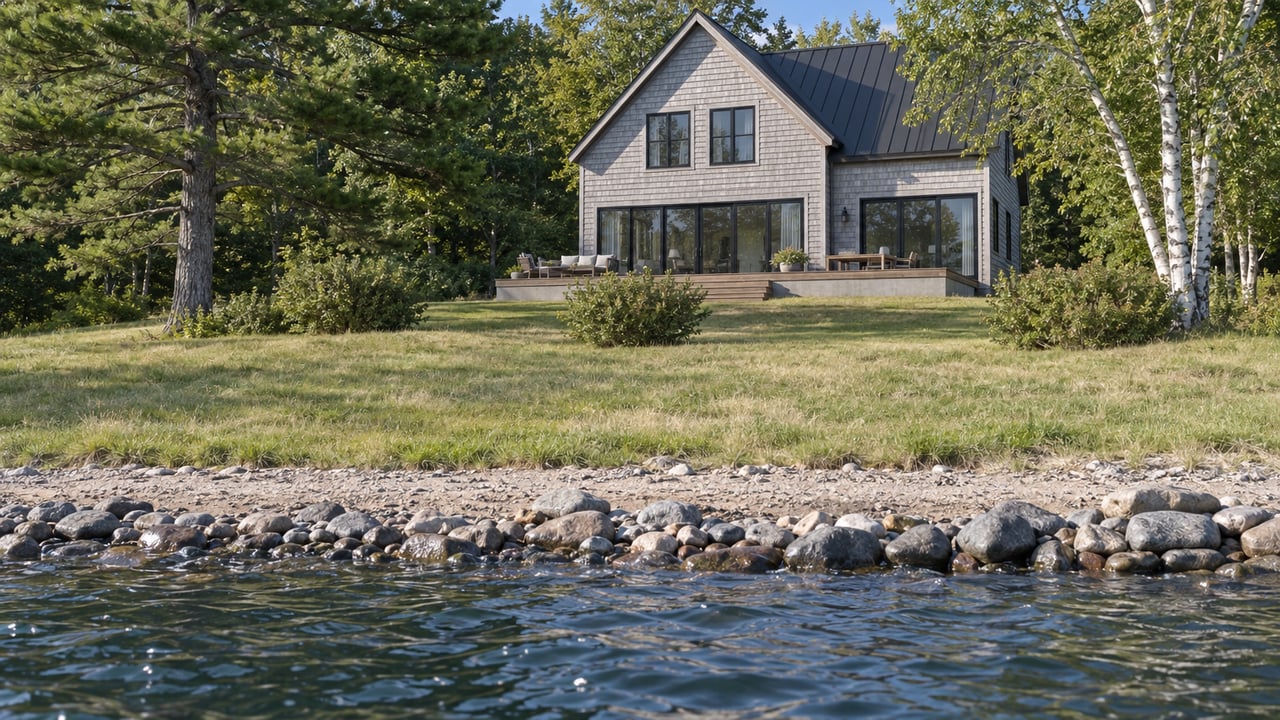
A dock on Grand Traverse Bay and a dock on Elk Lake, sitting a few blocks apart in the same village, are not protected by the same law. One owner holds title down to a line the state can redraw with the water level. The other owns the lake bottom itself, out toward the middle, with a different set of permissions attached. Both listings will say "waterfront." Only one of them means what most buyers assume it means.
Elk Rapids makes this easy to miss because the village sits on four different bodies of water at once. East Grand Traverse Bay runs along the west side. Elk Lake sits to the east. Bass Lake, a 144-acre inland lake, lies on the north side between the two. The Elk River threads through the middle, connecting the Bay to the Antrim County Chain of Lakes. A buyer comparing a listing on River Street to one on Bass Lake Road isn't just comparing views and price per square foot. They're comparing two different bundles of ownership rights under Michigan law, and the difference shows up long before closing, in the deed, the survey, and the dock permit file.
Four Waters, One Village
Michigan divides waterfront property into two legal categories, and the split has nothing to do with how a lake looks from a dock. It comes down to whether the water is one of the Great Lakes or an inland lake or stream. Grand Traverse Bay is Lake Michigan water, so Bay-front parcels in Elk Rapids fall under Great Lakes riparian law. Elk Lake, Bass Lake, and the Elk River are inland waters, so frontage on any of them falls under a separate set of rules that Michigan courts have built up over more than a century of bottomland disputes.
The distinction sounds technical until it touches something a buyer cares about: how much of the water you actually own, whether the public can walk your beach, and what it takes to get a dock permit approved.
What Bay Frontage Actually Owns
On Grand Traverse Bay, a property owner's title generally runs down to the ordinary high-water mark. Below that line, the state holds the land in public trust. That has a very specific practical consequence that Michigan's courts settled two decades ago: the public has a legal right to walk along a privately owned Great Lakes beach as long as they stay below the ordinary high-water mark. The wet sand at the water's edge can be treated as public even when the dry sand above it is titled to the homeowner.
For a buyer looking at Bay frontage, this means the beach in the listing photos is not fully private, no matter how the parcel lines are drawn. It also means the boundary itself can move. During high water, the ordinary high-water mark shifts landward and the strip of legally public shoreline narrows. During low water, it shifts back out. A survey done in one water-level year won't necessarily describe the same line five years later.
Docks on the Bay also answer to a different regulatory chain. Because Grand Traverse Bay is part of the Great Lakes system, dock permitting runs through Michigan's environmental agency and can draw in the Army Corps of Engineers, with review focused on navigation, water quality, and impact on neighboring riparian owners. That's a heavier process than most buyers expect from a residential dock.
What Lake and River Frontage Actually Own
Cross over to Elk Lake, Bass Lake, or the Elk River, and the ownership rules flip. On a natural inland lake or stream, Michigan law generally gives the riparian owner title to the bottomland itself, not just the shoreline, extending out toward the center of the lake or the thread of the river. There is no public trust doctrine here. The beach-walking right that applies to the Great Lakes does not extend to inland lakes, and walking across a privately owned inland shoreline without permission is generally treated as trespass.
That single difference changes what a buyer is purchasing. Inland lake and river frontage in Elk Rapids comes with a more exclusive footprint than Bay frontage does. The tradeoff is that the underwater boundary between neighbors is harder to pin down. On a perfectly round lake, Michigan courts use what's sometimes called the pie method, drawing property lines straight to the center point. Almost no lake is actually round, so most properties, including those on Elk Lake and Bass Lake, fall under the more complicated thread-line method, where a line is drawn through the geographic middle of the lake and each owner's underwater boundary is set at a right angle to that thread line rather than as a straight extension of the upland lot line.
The Harbor Already Shows You This
The village doesn't have to explain any of this in the abstract. Its own harbor system is built around the split. Edward C. Grace Memorial Harbor runs two separate operations under one name. The Lower Harbor, with 213 slips ranging from 28 to 70 feet, sits on East Grand Traverse Bay. A second, smaller system, the Upper Harbor and Upper Harbor II, offers roughly 50 slips with direct access to the Elk River and the Antrim County Chain of Lakes. The village even runs two different boat launches: a four-lane ramp on the Bay and a two-lane ramp on the river side. A single public dock reservation system manages two water bodies that operate, legally and physically, as separate systems.
Public paddling access follows the same pattern. In 2026, Paddle Antrim reported that Rotary Park added a universal-access kayak launch along with the state's first permanent non-motorized boat washing station, paired with improved restrooms. Combined with the existing launch in Kewadin, that creates a point-to-point route on the Chain of Lakes Water Trail, built specifically for the inland lake and river system rather than the open Bay. The village's own infrastructure keeps drawing the same line the property law draws.
Where the Difference Surfaces in a Real Transaction
None of this matters much until an offer is on the table. That's when the two categories stop being background information and start showing up in the paperwork. Before writing an offer on any Elk Rapids waterfront listing, a few things are worth confirming directly rather than assuming from the listing description:
- Whether the deed's legal description actually extends the property to the water, or whether the listing is describing proximity rather than true riparian frontage
- Which water body the parcel touches, since Bay frontage and Elk Lake, Bass Lake, or Elk River frontage carry different bundles of rights even when both are marketed as waterfront
- Whether any existing dock has a current, valid permit on file, since an unpermitted structure becomes the new owner's liability and may need to be removed or brought into compliance
- Whether the property conveys full riparian ownership or only a deeded or shared access easement, since an easement typically grants a path to the water without the exclusive right to install a private dock
- On inland lake frontage, whether a formal bottomland survey has ever been done between the property and its neighbors, particularly on an irregularly shaped shoreline
The Survey Problem Nobody Mentions First
The last point is the one most buyers don't think to ask about, and it's the one most likely to surprise a seller too. Very few lakes in Michigan have ever had a submerged land survey formally ratified by a court, which is the standard required to officially establish where one owner's bottomland ends and the next one begins. On a straightforward upland lot, the property line is a fixed, surveyed fact. On Elk Lake or Bass Lake, the underwater line between two neighboring docks is often something closer to a shared assumption, based on where the docks have always sat rather than where the thread-line method would actually place the boundary.
That gap rarely causes a problem until someone wants to build a new dock, add a boat lift, or expand a boathouse, and a neighbor disagrees about where the line falls. For a buyer, the practical takeaway is simple: a dock that has been in the same spot for twenty years is not the same thing as a dock confirmed to be within the owner's actual bottomland rights. If dock placement, expansion, or boat storage matters to the purchase, that's a question for a survey before closing, not an assumption carried over from the listing photos.
A Few Questions Worth Asking Before You Close
Does lake frontage on Elk Lake or Bass Lake come with the same public beach access that Bay frontage sometimes does? No. The public trust rule that lets people walk a Great Lakes beach below the ordinary high-water mark is specific to the Great Lakes. On Elk Lake, Bass Lake, or the Elk River, the shoreline is generally private, and walking across it without permission is treated as trespass rather than a protected public right.
If a dock has been in place for years, is it automatically legal? Not necessarily. Longevity doesn't substitute for a valid permit or confirmed bottomland boundary. A dock that has sat in the same place for decades can still be unpermitted, or can still sit partly on a neighbor's bottomland if the underwater line was never formally established.
Can I get the underwater boundary confirmed before I write an offer? Yes, through a licensed surveyor experienced in riparian bottomland surveys, using either the pie method or the thread-line method depending on the lake's shape. This isn't a standard step in most residential transactions, so it has to be requested specifically if dock placement or future shoreline plans are part of the decision.
Comparing a Bay listing to a lake listing in Elk Rapids means comparing two different sets of rights, not two versions of the same view. If you're weighing a property on Grand Traverse Bay against one on Elk Lake, Bass Lake, or the Elk River, The Shawn Schmidt Group can walk through what each parcel's riparian status actually includes before you put an offer together.