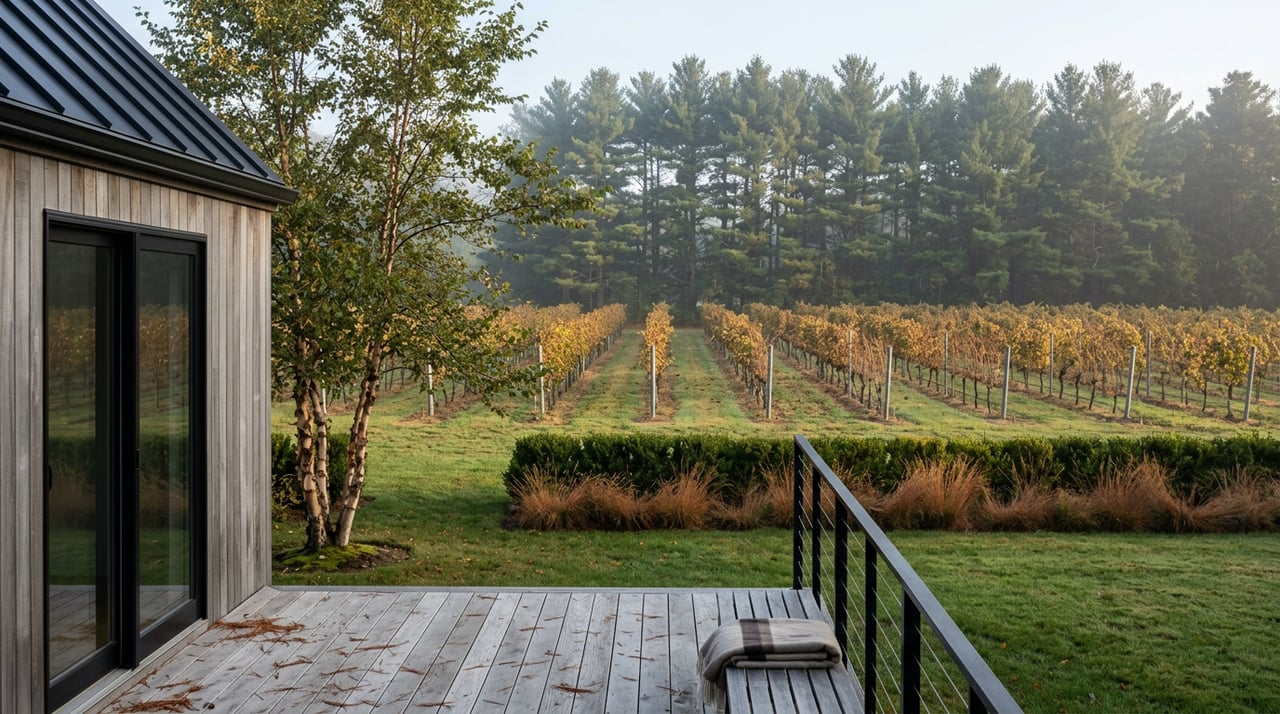
Thinking about buying vineyard or orchard property on Old Mission Peninsula? It is one of Northern Michigan’s most distinctive agricultural landscapes, but it also comes with a more layered due diligence process than a typical land purchase. If you want to understand how zoning, protected farmland, site conditions, access, and licensing can shape your decision, this guide will help you ask better questions before you buy. Let’s dive in.
Why Old Mission Peninsula Draws Buyers
Old Mission Peninsula is a narrow, bay-bounded agricultural corridor in Peninsula Township that has long been recognized for fruit growing. The federal AVA rule describes it as about 19 miles long and no more than 3 miles wide, and township planning documents point to the area’s soils, slope, and microclimate as key advantages for orchards and vineyards. That combination has helped support a well-established wine and visitor economy, with the official wine trail currently listing ten wineries.
For a buyer, that matters because you are not just evaluating a parcel. You are stepping into a place with an active agricultural identity, a tourism presence, and a planning framework designed to preserve both. You can review the peninsula’s agricultural and land-use context in the Peninsula Township master plan and the federal Old Mission Peninsula AVA rule.
Farmland Protection Shapes What You Can Do
One of the first things to understand is that farmland protection is a major part of the story on Old Mission Peninsula. According to the township master plan, the purchase-of-development-rights program and other protections cover more than 6,000 acres, or 34 percent of the township, while the agricultural preservation area covers about 53 percent of township acreage.
That is important because a property may be influenced by more than zoning alone. Conservation easements, deed restrictions, and PDR arrangements can limit development rights, and in some cases the ordinance notes that dwelling rights may be extinguished by deed or conservation easement. Before you focus on views, acreage, or future plans, confirm what rights actually transfer with the land.
Start With Zoning and Recorded Restrictions
If you are buying for agricultural use, your first due diligence step should be confirming the parcel’s zoning district and reviewing any recorded restrictions. Peninsula Township’s current ordinance says the A-1 district exists to preserve the peninsula’s agricultural character. In that district, field crop and fruit farming, horticulture, greenhouses, tree nurseries, customary home occupations, and farm stands are allowed by right.
That sounds straightforward, but buyers often run into complexity when their long-term vision includes processing, tastings, or hospitality-related uses. The township ordinance is the key source here, and it is worth reviewing early through the township’s ordinance and planning resources.
A-1 Uses Are Broader Than Winery Uses
Basic agricultural production and certain related uses may be permitted by right in A-1. But winery-style uses are more regulated and come with additional standards tied to acreage, parcel width, active production minimums, setbacks, and viewshed review.
The ordinance also limits food service in retail farm-processing settings to limited items while prohibiting restaurants, cafes, and off-site catering in that category. If you are evaluating a parcel with a vision beyond farming itself, you will want to confirm the exact use category before making assumptions.
Viewsheds and Easements Matter Early
The research process should also confirm whether the parcel sits in a viewshed area or is subject to a conservation easement or PDR structure. These factors can affect building placement, development potential, and how a site can evolve over time.
A helpful rule of thumb is this: do not treat marketing language as the final answer. Compare the seller’s description, title work, easement documents, and township rules to make sure they all support your intended use.
Site Conditions Can Make or Break a Property
On Old Mission Peninsula, the land itself matters as much as the legal framework. The township master plan identifies the Emmet-Leelanau soil association as well-drained, slightly acid to neutral sandy loams and loamy sands across gently to steeply sloping areas. The same plan notes that the peninsula’s glacial terrain includes rolling hills, valleys, wetlands, and bluffs more than 200 feet above lake level.
For buyers, that means two parcels with similar acreage may perform very differently. Slope, aspect, drainage, and elevation can all affect how suitable a site is for grapevines or fruit trees.
Soils and Drainage Deserve Close Review
MSU Extension notes that vineyard performance is influenced by soil rooting depth, chemistry, texture, slope, drainage, water-holding capacity, precipitation, climate, and site history. For orchard buyers, MSU Extension says most fruit trees do best in sandy loam to loamy soils with a pH around 6.0 to 7.0, while heavier clay may require berms or raised beds.
The same guidance notes that sweet cherries need well-drained soils. If you are comparing orchard parcels, a soil profile and drainage assessment can help you avoid costly surprises after closing.
Frost Risk Is About Topography Too
The peninsula’s bay-moderated microclimate is one of its biggest agricultural strengths. The township master plan states that the area has a frost-free season of 140 to more than 150 days, and that this moderated climate helps protect buds from early- and late-season frosts. The federal AVA rule also described the peninsula as having more moderate spring and fall temperatures than surrounding areas.
Still, frost risk does not disappear. According to MSU Extension’s guidance on farm air drainage, cold air sinks and drains downhill, so low spots, gaps, and obstructions can become major factors during radiation frost events. In practical terms, that means you should study where cold air settles, not just how the property looks on a sunny day.
Water and Utility Questions Need Clear Answers
Water availability and drainage are not side issues on a working agricultural property. The township ordinance requires demonstration of adequate water for wholesale farm-processing facilities, and the master plan also identifies roadway drainage and shoreline runoff as ongoing management issues in the broader area.
If the property includes an existing operation or your plans involve future processing, water capacity should be verified early. Ask for documentation, not assumptions, and make sure your review matches the intended use of the site.
Access Can Affect Daily Operations
Old Mission Peninsula has one primary north-south route, M-37, which the township identifies as the peninsula’s main road and a Scenic Heritage Route. The master plan also notes that the township has only one primary road on and off the peninsula, which can create congestion when tourist traffic rises.
That matters if you are evaluating a parcel for farming, deliveries, customer visits, or seasonal traffic. Travel times, turning movements, driveway placement, and sight distance can all influence how workable a site feels in real life.
Driveway Permits Are Part of Due Diligence
The township ordinance requires a driveway or access permit from the Grand Traverse County Road Commission or MDOT before a land use permit can be issued. The Grand Traverse County Road Commission review process also applies when access is being created or upgraded, and GTCRC states that driveway permits can take 7 to 10 business days.
If your transaction includes a split or a newly created parcel, road review can become even more important because land divisions may be checked for sight distance and roadway safety. It is smart to verify access feasibility before you are deep into inspections.
Existing Winery Properties Add Licensing Layers
If you are purchasing an existing winery property or planning a wine-making operation, the process extends beyond land use. The Michigan Liquor Control Commission FAQ for winemakers explains that a Wine Maker or Small Wine Maker license covers manufacturing and tasting-room sales, local approval is required for on-premises tasting-room permits, and ownership transfers require an application.
MDARD also classifies wineries as food establishments. That means food-business applications generally must be filed at least 30 days before opening, and some facilities require plan review.
Right to Farm and Operating Compliance
For active agricultural operations, Michigan’s Right to Farm program is the state resource for nuisance complaints and GAAMPs compliance. If the property is already operating, it helps to understand whether current practices align with applicable state standards.
This is one reason vineyard and orchard purchases often require a broader advisory team than a standard residential transaction. The goal is not just to buy land. It is to confirm that the land, the operation, and the approval path all work together.
A Smart Buyer’s Checklist
Before you move forward on an Old Mission Peninsula vineyard or orchard property, focus on these core questions:
- Is the parcel zoned A-1, and what uses are allowed by right?
- Is the property in a viewshed area?
- Is there a conservation easement, deed restriction, or PDR arrangement?
- Do recorded documents match the seller’s description of the property?
- How do soils, slope, drainage, and aspect support your intended crop?
- Where does cold air drain during frost events?
- Is water supply adequate for the proposed use?
- Is legal and practical access in place?
- If there is processing or tasting activity, what township and state approvals are required?
- If you are buying an existing operation, what licenses or applications must transfer or be refiled?
Why Local Guidance Matters
Buying agricultural property on Old Mission Peninsula is rarely just about acreage and price. It is about understanding a tightly protected landscape, a unique microclimate, and a set of local and state rules that can shape what is possible.
That is where informed local guidance can make a real difference. If you are considering a vineyard, orchard, or winery-related property in Grand Traverse County, Carly Petrucci can help you evaluate the land through a more strategic lens and connect your search to the realities of zoning, access, and property-specific due diligence.
FAQs
What makes Old Mission Peninsula attractive for vineyard and orchard buyers?
- Old Mission Peninsula is known for its bay-moderated microclimate, agricultural soils, sloping terrain, and established fruit-growing and wine economy, all of which support vineyard and orchard interest.
What zoning should buyers check for Old Mission Peninsula agricultural property?
- Buyers should confirm whether the parcel is in the A-1 district and then verify whether the intended use is allowed by right or subject to added standards under Peninsula Township’s ordinance.
What restrictions can affect development on Old Mission Peninsula farmland?
- Conservation easements, deed restrictions, purchase-of-development-rights arrangements, viewshed standards, and extinguished dwelling rights can all affect what you can do with a property.
What site features matter most when buying orchard or vineyard land?
- Soils, slope, drainage, aspect, frost exposure, water availability, and site history are all key factors that can influence how well a parcel supports agricultural use.
What should buyers know about access on Old Mission Peninsula?
- M-37 is the main route on and off the peninsula, seasonal congestion can affect travel, and driveway or access permits may be required before land use permits are issued.
What licenses are needed for an existing winery property in Michigan?
- Winery properties may involve MLCC licensing for manufacturing and tasting-room sales, local approvals for certain permits, and MDARD food-establishment requirements depending on the operation.