Buying a waterfront property in Leelanau County with short-term rental income in mind can feel straightforward at first. Then you realize one simple fact: short-term rental rules change from one township or village to the next. If you want to avoid surprises after closing, you need more than a pretty shoreline and a strong summer booking forecast. You need parcel-level clarity on permits, caps, occupancy, and private restrictions. Let’s dive in.
Why Leelanau County STR Rules Matter
Leelanau County does not have one countywide waterfront short-term rental rule. Official materials show different definitions and operating standards depending on the local jurisdiction, including the Village of Northport, Leelanau Township, Suttons Bay Township, Cleveland Township, Bingham Township, and others. In many areas, a rental may require annual registration or a permit, plus a local contact, on-site parking, and documentation tied to bedrooms or septic capacity.
That means your buying decision should not rest on location alone. A waterfront cottage, condo, or year-round home may look ideal for seasonal income, but the real question is whether the property can legally operate the way you intend. As the Village of Suttons Bay notes on its short-term rental page, permit availability and transferability can shape what is actually possible.
Start With the Exact Jurisdiction
One of the biggest mistakes buyers make is relying on a mailing address instead of the actual governing jurisdiction. A Northport address, for example, may fall under Village of Northport rules or Leelanau Township rules depending on the parcel. Those are not the same thing.
Before you underwrite projected income, confirm the parcel’s township or village and zoning district. The Village of Northport ordinance materials make clear that local enforcement and registration requirements are specific to the village, not the broader area.
Northport Waterfront Rules
Village of Northport
In the Village of Northport, rentals for less than 21 days are treated as short-term rentals. The village requires registration before any dwelling unit can be rented for that period, and the registration must be updated annually. The ordinance also allows fines of $200, plus an additional $200 per day after notice for noncompliance, and repeated violations can lead to permit revocation, according to the official village STR ordinance.
For buyers, that means compliance is not optional paperwork. If you are purchasing for personal use plus occasional rental income, the timing and status of registration should be part of your due diligence before closing.
Leelanau Township
Leelanau Township, which surrounds the Northport waterfront area, requires a short-term rental permit to operate or even advertise an STR. The township says occupancy is based on approved bedrooms, with a maximum of 15 guests over age 5, and only one dwelling unit per parcel may be used. Guests must stay in the dwelling itself, not in RVs, campers, boats, or tents, based on the township’s STR information page.
The township also requires a local contact within 45 minutes, on-site parking, and calendar-year permits that do not transfer with the property. If you are buying a waterfront home with plans to continue an existing rental program, that non-transferability is a major underwriting issue.
Suttons Bay Waterfront Rules
Village of Suttons Bay
The Village of Suttons Bay is one of the tightest STR markets in the county. Its official page states that the village has capped STR permits at 45, currently has 53 permits issued, and will not issue new permits until the number returns to the cap through attrition. The village also says permits are non-transferable on sale, according to the official village STR page.
If you are considering a village waterfront home or condo, this is a critical detail. A seller may have been operating legally, but that does not mean you will automatically step into the same operating status after closing.
Suttons Bay Township
Suttons Bay Township also uses a permit system, and it has a hard cap of 150 permits per calendar year. The ordinance applies to entire dwelling units, sets occupancy based on both bedroom count and parking supply, and limits guests to two per bedroom. It also prohibits keyholing, which means guests cannot be given use of a separate private waterfront parcel for recreation, per the township ordinance.
This matters for waterfront and water-access properties alike. If a listing mentions shared frontage, nearby beach rights, or a separate waterfront parcel, you should verify exactly what can and cannot be offered to short-term guests.
Leland, Cleveland, Elmwood, and Bingham
Leland Township
Leland Township takes a registration approach rather than using a permit cap in the ordinance reviewed. Owners must register annually, pay a $150 fee, provide detailed property and contact information, and use a local contact who can respond within 45 minutes. The ordinance defines an STR as a lease period of less than 75 days during a calendar year, and the registration number must appear on advertisements and contracts, according to the official Leland Township ordinance.
That longer definition is a reminder that even the basic meaning of short-term rental is not consistent across Leelanau County. You should always review the local rule before assuming a rental plan fits.
Cleveland Township
Cleveland Township has a more structured permit system. The township board’s resolution says enforcement begins January 1, 2025, and a permit is required for rentals in residential and agricultural zones. The ordinance limits STRs to one dwelling unit per parcel, caps occupancy at two guests per bedroom and a maximum of 12, prohibits on-street parking, requires a 24-hour contact within 30 miles, and requires neighbor notice within 300 feet, based on the township board resolution.
Cleveland Township also gives priority to renewal applicants and local owner-occupants before any remaining permits are awarded by lottery. For buyers, that means permit access may depend on timing and process, not just property eligibility.
Elmwood Township
Elmwood Township is another capped market. Township materials state that STRs must maintain a license under the township’s licensing ordinance, and official materials indicate the ordinance authorizes 93 STR licenses, based on 4 percent of dwelling units at the time it was adopted. The current zoning text is available through the Leelanau County document portal.
If you are considering Elmwood waterfront or bay-view property, license availability may matter just as much as the home itself. In a capped market, the best house does not always equal the best rental opportunity.
Bingham Township
Bingham Township allows short-term rentals in the Residential, Agricultural Rural Residential, and Commercial districts. Its permit application says the annual permit fee is $300 and applies only to the rental of an entire dwelling unit for less than 30 consecutive days. The application also requires a site plan, health department approval, and septic or holding-tank proof, according to the township zoning and permit materials.
This is another example of why bedroom count alone is not enough. Septic and health department documentation can directly affect what a property can support.
Areas That Need Extra Verification
Not every waterfront area should be underwritten the same way. For Glen Arbor Township, the official site includes zoning ordinances and land-use permit materials, but a standalone current STR registration page was not verified in the reviewed sources. The zoning framework shows inns, lodges, hotels, rooming houses, and rental cottages as permitted uses in certain contexts, so parcel-specific zoning review is especially important, based on the township zoning ordinance page.
For Empire Village, the reviewed official sources included a draft STR registration ordinance and related materials, but not a clearly adopted final ordinance. That makes Empire a verify-first location until the operative rules are confirmed through the appropriate local office, as reflected in the draft ordinance materials.
What Buyers Should Underwrite Conservatively
If you are buying for personal enjoyment plus rental income, conservative underwriting is your friend. In several Leelanau County jurisdictions, the operating right does not transfer with the property. That includes Leelanau Township, the Village of Suttons Bay, Suttons Bay Township, and Cleveland Township, based on the ordinance materials cited in the research.
You should also base income projections on the legal occupancy limit, not the number of beds a seller staged into the home. In several jurisdictions, occupancy is tied to bedrooms, parking, and septic capacity. For waterfront homes, access rights should be reviewed just as carefully, especially where keyholing or similar guest use of separate waterfront parcels is prohibited.
Finally, tax modeling should include Michigan’s 6% use tax on lodging. The Michigan Department of Treasury explains that the tax applies to lodging furnished on a commercial basis and is not due on rooms or lodging rented continuously for more than one month.
Waterfront STR Due Diligence Checklist
Before you move forward on a Leelanau County waterfront purchase, make sure you have answers to these questions:
- Confirm the exact township or village and zoning district for the parcel.
- Ask whether STR use is allowed by right, allowed by permit, capped, or still unclear.
- Verify whether the permit or registration transfers when the property is sold.
- Match the expected guest count to bedrooms, septic records, and parking rules.
- Review deed restrictions, HOA documents, subdivision covenants, or condo bylaws.
- Confirm the required local contact arrangement before closing.
- Build projections around the legal occupancy ceiling, operating costs, and Michigan’s 6% use tax.
Why Local Guidance Matters
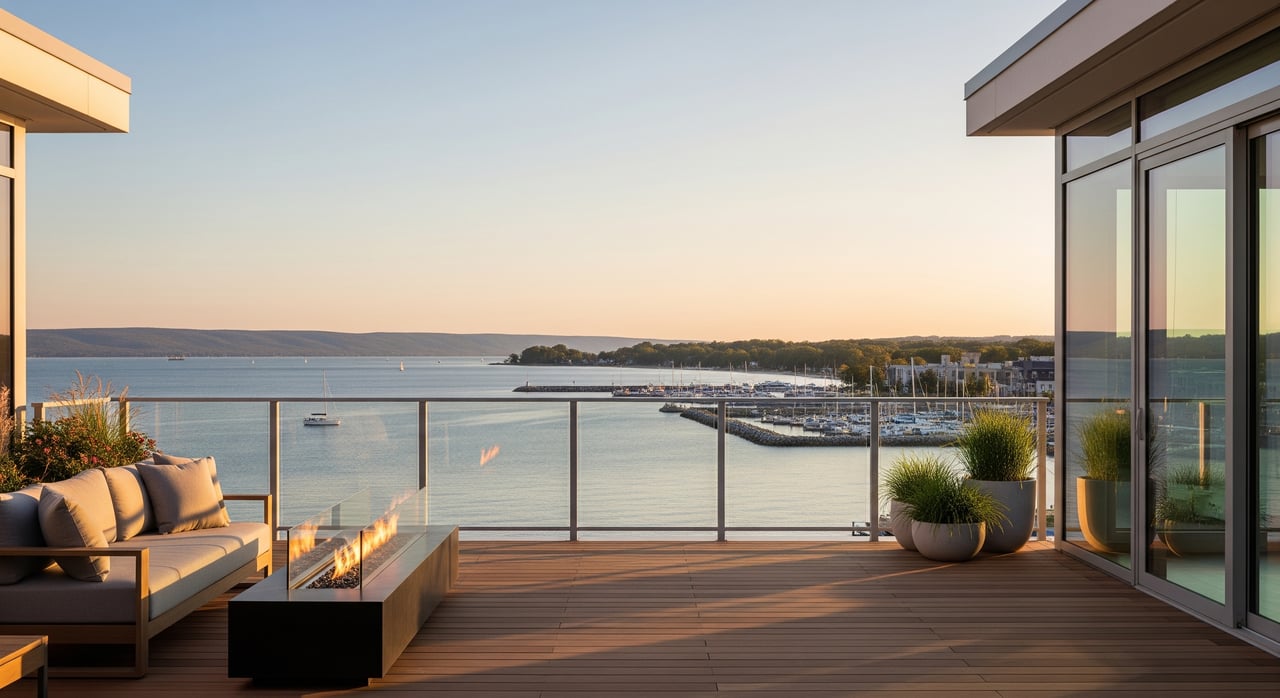
Leelanau County waterfront real estate is compelling for all the reasons you already know: shoreline, views, boating access, and strong seasonal appeal. But if short-term rental income is part of your purchase strategy, the real value lies in understanding the rulebook before you buy, not after.
That is where careful local guidance can make a real difference. If you are weighing a waterfront purchase in Leelanau County and want a clear, property-specific conversation about location, use, and resale implications, connect with Carly Petrucci for a private consultation.
FAQs
What are short-term rental rules for Leelanau County waterfront homes?
- Short-term rental rules are not uniform across Leelanau County. Requirements vary by township or village and may include permits, registration, occupancy limits, local contact rules, parking standards, and private covenant review.
Can a waterfront STR permit transfer to a buyer in Leelanau County?
- In several jurisdictions, including Leelanau Township, the Village of Suttons Bay, Suttons Bay Township, and Cleveland Township, the operating right is non-transferable or does not run with the property.
What is the short-term rental cap in Suttons Bay Village?
- The Village of Suttons Bay states that STR permits are capped at 45, with 53 permits currently issued, and no new permits will be issued until the number returns to the cap through attrition.
How is guest occupancy calculated for Leelanau County short-term rentals?
- In several local jurisdictions, occupancy is tied to approved bedrooms, septic capacity, and sometimes parking supply, so the legal guest count may be lower than a seller’s marketing suggests.
Can Leelanau County STR guests use separate waterfront access parcels?
- Not always. Suttons Bay Township and Cleveland Township prohibit keyholing or similar use of separate private waterfront parcels for short-term rental guests, so access rights should be reviewed closely.
What taxes apply to short-term rentals in Michigan?
- Michigan’s 6% use tax on lodging generally applies to rooms or lodging furnished to the public on a commercial basis, though it is not due on rooms or lodging rented continuously for more than one month.